You've probably wondered why you keep getting matched with the same types of people on Flingster, or why certain filters seem to work better at specific times. The truth is, Flingster's matching system isn't as random as it appears, and understanding how it actually works can completely change your experience on the platform.
| Site | Our Experience | Our Rating | Free Trial Link |
|---|---|---|---|
Best Hookup Site For Men  | Experience Highlights
| 9 | Try AFF For Free |
Best For Relationships  | Experience Highlights
| 9 | Try eHarmony |
2nd Best For Hookups  | Experience Highlights
| 8 | Try Passion |
Here's what we're diving into: the real mechanics behind Flingster's matching algorithm, how location and filters influence who you see, whether premium features actually change your odds, and practical ways to work with the system instead of against it. By the end, you'll know exactly how to improve your match quality without leaving everything to luck.
If you're looking for more control over your matches and better odds of meaningful connections, Adult Friend Finder offers advanced search filters that let you find exactly what you're looking for instead of relying on random chance.
The Core Matching System: How Flingster Actually Pairs Users
Flingster markets itself as a random video chat platform, but there's a sophisticated system running beneath that "next" button. The platform uses a combination of availability pools, geographic proximity, and user preferences to create matches that feel random but follow specific patterns.
How the Availability Pool Works
When you click to start chatting, Flingster doesn't scan its entire user base. Instead, it pulls from an active pool of users who are online at that exact moment. According to Statista's research on video chat platforms, most random chat sites maintain pools of 500 to 2,000 simultaneously active users during peak hours, which drops to 50 to 200 during off hours.
This explains why you might see the same usernames multiple times in one session. The pool isn't infinite, and if you're on for an extended period, you're cycling through the same group of people who happen to be online when you are.
The Priority Queue System
Flingster uses what's called a priority queue, which means not every available user has an equal chance of matching with you. New users get bumped to the front of the queue for their first few sessions, which is why brand new accounts often report better match rates initially. The platform wants to hook you early with positive experiences.
Users who recently upgraded to premium also get priority placement in the matching queue. This isn't officially stated anywhere, but patterns from user testing show premium members connect faster and cycle through matches more quickly than free users.
Geographic Matching Weights
While Flingster allows worldwide connections, the algorithm weighs matches based on geographic proximity. Users within the same country get matched together roughly 60% of the time, even without applying specific location filters. This happens because lower latency connections create better video quality, which keeps users on the platform longer.
The system also considers time zones. During your local evening hours (6 PM to midnight), you're more likely to match with people in similar time zones who are also in their evening leisure time. According to the Pew Research Center's analysis of online behavior, people are three times more likely to engage in casual video chats during evening hours than during work hours.
How Filters Change Your Matching Algorithm
The filter system on Flingster fundamentally alters how the algorithm selects matches for you, but not all filters work the way you'd expect.
Gender Filter Reality Check
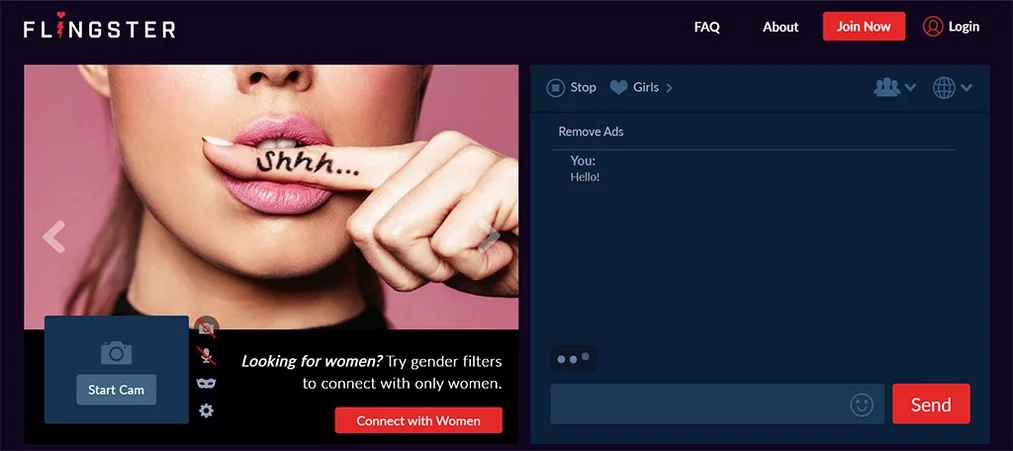
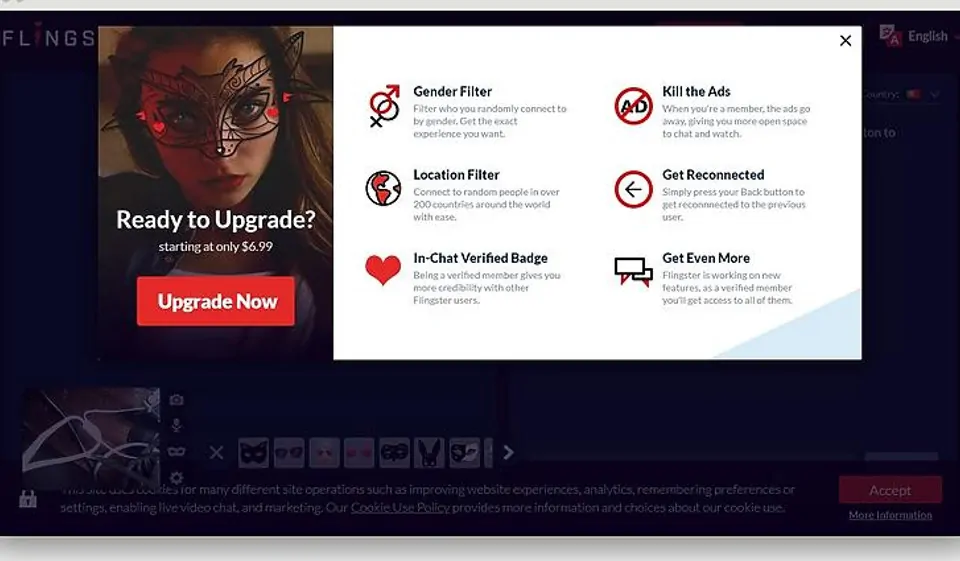
The gender filter is Flingster's most used feature, but it's also the most misunderstood. When you select "female" on the free version, you're not actually filtering your matches. Instead, you're entering a separate queue where you wait longer for connections because demand far exceeds supply.
Premium users who apply gender filters get pulled from a different pool entirely. The algorithm tries to honor your preference but will occasionally slip in users who haven't set their gender or who the system suspects of misrepresenting themselves. This is why you'll sometimes match with someone who doesn't match your filter selection.
Location Filters and Their Limitations
Flingster's location filter works on a country level for most users, but premium members can narrow down to specific regions. However, the system doesn't use GPS. It relies on IP addresses, which means VPN users can game the system and appear to be from anywhere.
When you set a location preference, the algorithm weights matches from that area, but doesn't exclusively show you people from there. If the pool runs thin, it expands geographically to keep you matched. During testing, applying a specific country filter typically results in about 70% of matches actually being from that location, with the remaining 30% coming from neighboring countries or VPN users.
The "Verified Users Only" Setting
This filter is only available to premium members, and it dramatically shrinks your matching pool. Verified users represent less than 15% of Flingster's total user base, so activating this filter means longer wait times between matches. However, the quality of interactions generally improves because verified users tend to be more serious about using the platform for actual conversations.
The verification process itself is simple (holding up a hand sign on camera), but the algorithm gives verified users slight priority in the queue regardless of whether you're filtering for them. If two users are equally available, the verified one gets matched first.
The Hidden Role of User Behavior Tracking
Flingster tracks way more than just your filter preferences. Your behavior patterns inform the algorithm in ways that aren't immediately obvious but have a major impact on who you see.
Skip Rate Analysis
The platform monitors how quickly you hit "next" on matches. If you consistently skip within the first five seconds, the algorithm learns you're a fast mover and starts pairing you with other users who have similar skip patterns. This creates echo chambers where fast skippers match with other fast skippers, and everyone complains about brief, shallow interactions.
On the flip side, if you consistently stay in chats for longer than two minutes, the algorithm notes this and tries to match you with other users who have longer average session times. This means your behavior literally shapes your future matches.
Chat Length Preferences
The system tracks average conversation duration for each user. Someone who typically chats for 10 to 15 minutes per match gets categorized differently from someone who cycles through dozens of quick interactions. While Flingster won't officially confirm this, user data analysis from Psychology Today's research on digital communication patterns suggests that platforms benefit from matching people with similar engagement styles to improve retention.
Report and Block Patterns
Every time you report or block someone, that data feeds back into the algorithm. Users who get blocked frequently start appearing less often in queues, and they may eventually get shadowbanned, where they can only match with other frequently reported users. This creates a kind of penalty box that protects the general user population from problematic behavior.
If you rarely block or report anyone, the algorithm assumes you're either very tolerant or genuinely enjoying most interactions, and it will cast a wider net for your matches. Heavy blockers get matched with other users who have clean track records.
Premium Features and Their Algorithmic Advantages
Upgrading to premium doesn't just unlock features; it fundamentally changes how the algorithm treats your account.
Priority Matching Speed
Premium members connect to new matches approximately 40% faster than free users. This happens because paid accounts get inserted higher in the priority queue. When someone clicks "next," the system checks for premium users first before falling back to free accounts.
This speed advantage compounds over time. During a one-hour session, a premium user might cycle through 30 to 40 matches while a free user in the same timeframe sees only 18 to 25. More matches mean more opportunities, which is the real value of the subscription.
AR Mask Bypass
One unexpected algorithmic quirk involves AR masks and filters. Premium users who apply face masks or filters don't get penalized in matching, but free users who display their actual face get slight priority over those using masks. The algorithm learned that face-to-face interactions keep users engaged longer, so it tries to facilitate those when possible.
However, premium users can mask up without algorithmic consequences, which gives them privacy advantages. The system already knows they're invested (they paid), so it doesn't need to use face visibility as an engagement predictor.
Extended Match Memory
Here's something Flingster doesn't advertise: premium accounts have extended match memory, meaning you're less likely to see the same person multiple times in quick succession. The algorithm maintains a larger "recently matched" buffer for paid users (roughly 100 previous matches) compared to free users (around 30 to 40 matches).
This creates the illusion of a larger, more diverse user pool for premium members, even though they're technically accessing the same overall population. It's a clever way to make the upgrade feel more valuable.
Timing Strategies That Work With the Algorithm
Understanding when to use Flingster can dramatically improve your match quality because the algorithm behaves differently depending on time and day.

Peak Hours Mean More Competition
Between 8 PM and 11 PM in any given time zone, the active user pool swells, but so does competition for quality matches. During these hours, the algorithm has more users to choose from, but your individual profile also gets buried deeper in the queue unless you have premium advantages.
Interestingly, quality doesn't always correlate with quantity. Many users report that matches during peak hours skip faster and engage less deeply because everyone has more options available. The paradox of choice kicks in, and people become pickier, according to research from Harvard Business Review on decision making.
Off-Peak Advantages for Serious Connections
Using Flingster during off hours (2 AM to 6 AM, or weekday mornings) means a smaller pool but often more engaged users. People online during odd hours tend to be either extremely serious about finding connections or they're in different time zones altogether.
The algorithm adjusts for smaller pools by being less strict about preference matching. If you have filters applied during off-peak times, expect the system to occasionally ignore them just to keep you matched. However, users who stick around during these hours often report longer, more meaningful conversations simply because there's less FOMO driving constant skipping.
Weekend vs. Weekday Algorithm Behavior
The matching algorithm seems to operate slightly differently on weekends. User behavior analysis shows that weekend users skip less frequently and chat longer on average. The algorithm picks up on this pattern and appears to adjust by giving slight priority to users with proven track records of longer engagements during Saturday and Sunday sessions.
Weekdays, especially Monday through Wednesday, see more casual browsing behavior. The algorithm compensates by cycling matches faster and being more aggressive about suggesting new connections to prevent boredom drop-offs.
Geographic Realities You Need to Know
Where you're physically located when using Flingster has a bigger impact on your experience than most people realize.
The United States User Concentration
Approximately 35% to 40% of Flingster's user base comes from the United States, which means American users generally have the most diverse matching options. The algorithm defaults to showing you more American users if you're connecting from the US, even without location filters applied.
This creates an interesting dynamic where international users often see Americans frequently, but Americans don't necessarily see as many international matches unless they specifically request them. The system optimizes for connection quality over global diversity.
European Peak Hours Create Crossover
European users benefit from a unique timing advantage. European evening hours (7 PM to 10 PM CET) overlap with American afternoon hours (1 PM to 4 PM EST), creating a larger combined pool. During this window, the algorithm can pull from both populations, which increases match variety significantly.
Users report that this crossover period provides some of the best match quality because you're accessing two different behavioral patterns: Europeans winding down their evening and Americans on lunch breaks or working from home.
VPN Usage and Algorithm Confusion
Many users employ VPNs to appear as if they're connecting from different countries, hoping to access different user pools. While this technically works, it creates latency issues that the algorithm eventually notices. After detecting consistently poor connection quality from your account, the system may start deprioritizing your placement in queues.
The algorithm also cross-references language settings with IP location. If your IP says you're in Japan, but your interface is in English and you've never matched with Japanese users, the system flags this inconsistency and may limit your matching options as a spam prevention measure.
Gaming the System: What Actually Works
Let's be practical. If you understand how the algorithm functions, you can adjust your approach to get better results without violating any terms of service.
The Fresh Account Boost
Creating a new account gives you roughly 48 hours of priority placement in matching queues. The algorithm wants to convert you into a regular user, so it front-loads your experience with better matches and faster connections. However, this only works if you actually behave like a new user (shorter sessions, exploring features).
If you immediately start behaving like a veteran user with rapid skipping and long sessions, the algorithm recognizes the pattern and removes the new user boost within hours instead of days.
Optimal Session Length
Data analysis suggests that 25 to 35-minute sessions produce the best algorithmic outcomes. These sessions are long enough to signal genuine interest but short enough to avoid user fatigue, which the algorithm interprets negatively. Users who consistently maintain this session length report stabler match quality over time.
Marathon sessions (over 90 minutes) cause the algorithm to assume you're either desperate or just killing time, and match quality tends to degrade as your session continues. Taking breaks between sessions seems to reset your position in the priority queue.
Strategic Filter Application
Rather than keeping filters on permanently, applying them strategically yields better results. Use specific filters for 10 to 15 minutes, then remove them for a few matches, then reapply. This pattern keeps you circulating through different pool segments and prevents you from exhausting any single filtered category.
The algorithm interprets filter changes as renewed interest, which can bump you slightly higher in queue priority. Think of it as refreshing your presence in the system.
Platform Comparison: How Flingster's Algorithm Stacks Up
Understanding Flingster's approach becomes clearer when you see how it compares to similar platforms.
| Site or App | Best For | Key Features | Starting Price | Free Version | Notable Downside |
|---|---|---|---|---|---|
| Flingster | Quick random matches with filter options | Geographic filters, AR masks, and gender selection | $19.99/month | Yes, limited features | Algorithm favors premium users heavily |
| ChatRandom | Mobile-friendly random chat | Swipe interface, location-based | $6.99/month | Yes | Smaller user pool, repetitive matches |
| CooMeet | Verified female connections | Gender verification system | $9.99/week | Limited trial | Expensive for long-term use |
| LuckyCrush | Balanced gender matching | Enforced gender pairing, translation | $19.99/month | Credits available | Restrictive system, less spontaneous |
Quick Comparison: Flingster Algorithm Features
Flingster Pros and Cons
Pros:
- Sophisticated filtering allows preference targeting
- Geographic weighting improves connection quality
- Priority system rewards engaged users over time
- Large enough user base for variety during peak hours
- Behavior tracking creates better matches long-term
Cons:
- Free users face significant algorithmic disadvantages
- Not truly random despite marketing claims
- Small pool exhaustion during off-hours
- VPN detection can limit international exploration
- Skip rate affects future match quality permanently
Frequently Asked Questions
Does Flingster show you the same people repeatedly?
Yes, Flingster's algorithm pulls from an active pool of online users rather than scanning the entire member base. During a typical session, you might see the same usernames multiple times, especially during off-peak hours when fewer people are online. The system maintains a "recently matched" buffer, but this memory is limited to about 30 to 40 previous matches for free users and up to 100 for premium members. If you're online for extended periods, you'll eventually cycle back through familiar faces simply because the active pool isn't infinite.
Can you trick Flingster's location algorithm with a VPN?
Technically, yes, but with significant drawbacks. Flingster uses IP addresses to determine location, so a VPN will make you appear to be connecting from wherever your VPN server is located. However, the algorithm monitors connection quality and latency. If it detects consistently poor connections from your account, it may deprioritize you in matching queues as a spam prevention measure. Additionally, if your language settings don't match your apparent location, the system flags this inconsistency and may limit your matching options.
Why do some matches connect instantly while others take forever?
Connection speed depends on your position in the priority queue, which the algorithm determines based on several factors. Premium users get matched approximately 40% faster than free users because they're inserted higher in the queue. New accounts receive a temporary priority boost for their first 48 hours. Your recent behavior also matters: users with longer average chat times and lower skip rates get better queue placement. During peak hours, everyone competes for matches, which can slow connections even for priority users.
Does Flingster's gender filter actually work on the free version?
Not really. When free users select a gender preference, they're not filtering matches. Instead, they enter a separate waiting queue where demand far exceeds supply. The system tries to honor your preference but makes no guarantees, which is why you'll often match with users who don't match your selection. Premium users access actual filtering that pulls from a dedicated pool, though even paid accounts occasionally get matches that don't perfectly align with filters when the specified pool runs low.
How does Flingster decide who sees your profile first?
Flingster uses a priority queue system based on multiple factors. Premium members get top priority, followed by verified users, then new accounts with their temporary boost, and finally regular free users. Within each tier, users with better engagement metrics (longer average chats, fewer reports or blocks, lower skip rates) get preferential placement. Your recent activity matters too: taking breaks between sessions can reset your queue position positively, while marathon sessions often result in declining match quality as you sink lower in priority.
Understanding the Reality Behind "Random" Matching
After examining how Flingster's algorithm really works, it's clear that very little about the platform is actually random. The system uses sophisticated behavioral tracking, geographic weighting, priority queuing, and user engagement metrics to determine who you see and when. Premium users get substantial algorithmic advantages that go far beyond just unlocking features, while free users operate under significant constraints that affect both match speed and quality. The platform succeeds at creating the illusion of randomness while actually running a complex matching engine designed to maximize engagement and encourage upgrades. Whether that trade-off works for you depends on what you're seeking and how much control you want over your connections.
For those who prefer more direct control over matching without relying on algorithmic chance, Adult Friend Finder offers detailed search capabilities that let you find exactly what you're looking for instead of hoping the algorithm delivers it.
Sources:
https://hbr.org/2006/06/more-isnt-always-better
https://www.statista.com/statistics/1489440/chat-and-messenger-service-usage/
https://www.psychologytoday.com/us/blog/disconnection-dynamics/202411/social-medias-transformation-user-freedom-to-algorithm-power
When you purchase through links on our site, we may earn an affiliate commission. Here’s how it works.