
Your time matters. Between work deadlines, gym sessions, and actually having a life outside your phone, you need a dating app that delivers results without turning into a part-time job. The question isn't which app has more users or better features anymore; it's which one actually respects the hours you're willing to invest.
| Site | Our Experience | Our Rating | Free Trial Link |
|---|---|---|---|
Best Hookup Site For Men  | Experience Highlights
| 9 | Try AFF For Free |
Best For Relationships  | Experience Highlights
| 9 | Try eHarmony |
2nd Best For Hookups  | Experience Highlights
| 8 | Try Passion |
This guide breaks down how AFF and Tinder handle your time differently, from the moment you create a profile to the point where you're actually meeting someone in person. We'll look at setup time, daily maintenance, how fast you get real conversations, and which platform gives you the best return on the hours you put in. By the end, you'll know exactly which app fits your schedule and goals without wasting another evening scrolling through profiles that go nowhere.
If you're tired of endless swiping that leads nowhere, Adult Friend Finder cuts through the noise with people who state exactly what they want upfront.
How Long Does It Actually Take to Get Started
Setting up a dating profile sounds simple until you're staring at empty text boxes, wondering what to write. The initial time investment varies dramatically between these platforms, and that first hour sets the tone for everything that follows.
Tinder's Quick but Shallow Setup
Tinder gets you swiping in about ten minutes. You link your Facebook or phone number, upload six photos, write a brief bio, and you're live. The platform focuses on speed over substance, which sounds great until you realize everyone else is doing the same bare minimum. According to the Pew Research Center, nearly half of online dating users say they found it difficult to find people they were attracted to, partly because profiles lack depth.
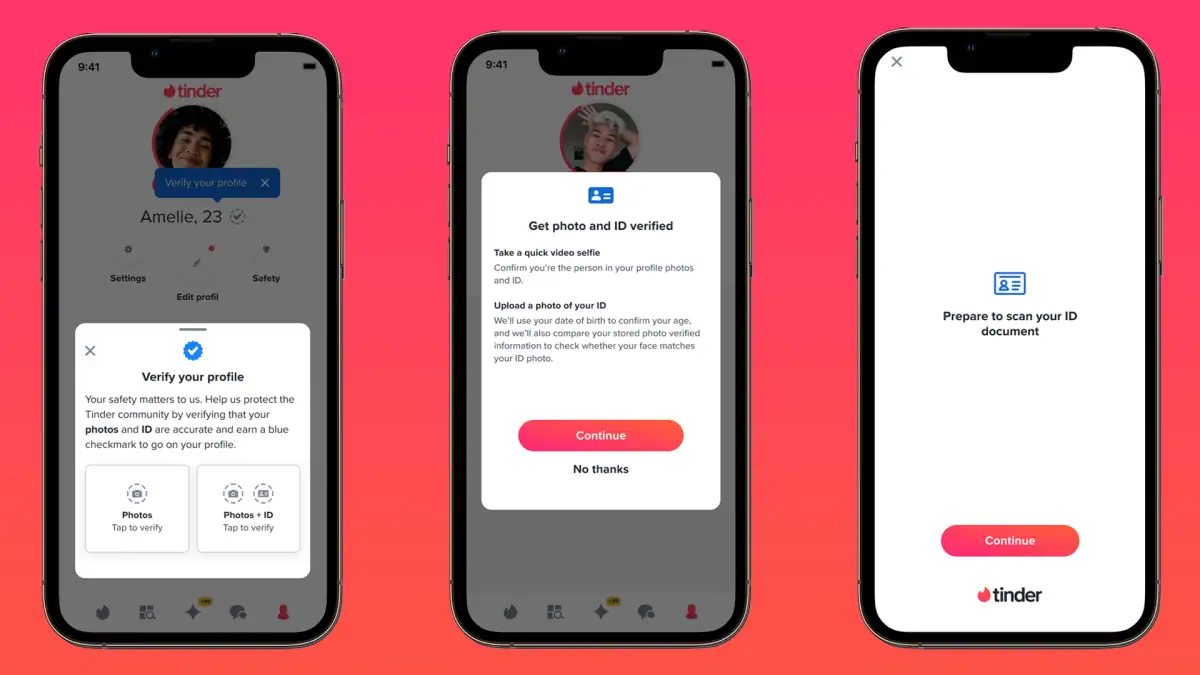
Your profile takes maybe 15 minutes if you're thoughtful about photo selection. Tinder doesn't ask for much detail about what you're looking for, your lifestyle, or your actual interests beyond a few tagged prompts. This minimal approach means you're competing with thousands of other profiles that all look essentially the same: some travel photos, maybe a dog, a joke in the bio.
The speed comes at a cost. You'll spend weeks figuring out through trial and error what people actually want because nobody states it clearly. That initial ten-minute setup becomes hours of guesswork later.
AFF's Detailed but Purposeful Onboarding
Adult Friend Finder asks for more information upfront, and that initial profile creation takes 30 to 45 minutes if you do it properly. You'll answer questions about your interests, what you're specifically looking for, your preferences, and you have space to actually explain who you are beyond six photos and a pun.
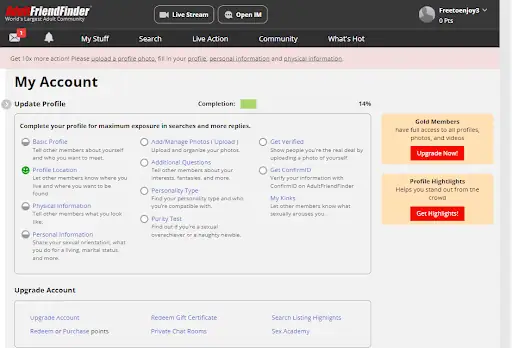
This feels slower at first, but here's what happens: your profile works harder for you afterward. People who message you have already read what you want. You're not spending the first five messages of every conversation trying to figure out if you're even looking for the same thing. The platform encourages detailed profiles because specificity saves time for everyone involved.
You can also browse and search immediately without that detailed profile, but filling it out properly means better matches find you without extra effort on your part. It's front-loading the work so you're not constantly explaining yourself later.
The Real Setup Time Winner
If you measure success by how fast you can start swiping, Tinder wins. If you measure success by how quickly you can start having productive conversations with compatible people, AFF's longer setup actually saves you time over the following weeks. Think of it like meal prep: spending an hour on Sunday saves you fifteen rushed decisions during the week.
Daily Time Investment: Swipe Culture vs. Browse Culture
How much time does each app demand from you every day to stay visible and get results? This is where the platforms diverge sharply in their respect for your schedule.
Tinder's Daily Swipe Obligation
Tinder operates on recency and activity. The algorithm favors users who log in regularly, and if you disappear for a few days, your profile gets shown less often. You're essentially penalized for having a life outside the app. Most users report spending 20 to 30 minutes daily just maintaining visibility, and that's before you count actual conversations.
The free version gives you limited likes per day, which sounds reasonable until you realize how many profiles you need to swipe through to find compatible people. You're not carefully considering each person; you're making split-second judgments based on a few photos. According to research published by the American Psychological Association, this rapid-fire decision-making creates a paradox of choice where more options actually reduce satisfaction.
If you want to speed up the process, you're pushed toward paid features like Super Likes, Boosts, and unlimited swipes. A Boost costs about $8 and puts you at the front of the queue for 30 minutes. That's paying money to compress time, which only makes sense if your time is extremely valuable or you're desperate for faster results.
AFF's More Flexible Engagement Model
Adult Friend Finder doesn't punish you for logging in every other day instead of twice daily. Your profile stays searchable, and people can find you through keyword searches, location filters, and interest matching, whether you're online or not. You can spend 15 minutes every few days browsing new profiles, responding to messages, and checking who's viewed you.
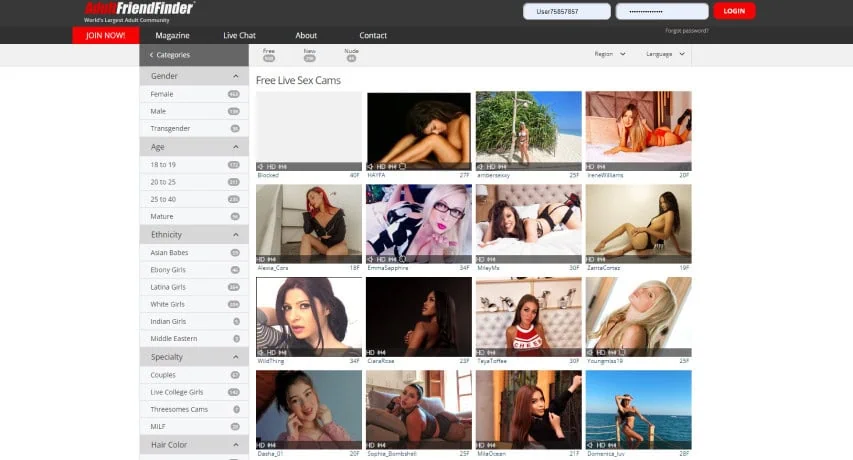
The platform has more ways to engage beyond the binary swipe. You can join group chats, comment on photos, participate in forums, or just browse profiles with detailed filters. This means you control the intensity. Some weeks you might spend 30 minutes daily if you're actively looking; other weeks you might check in twice and still get messages from your existing connections.
The paid membership unlocks fuller access, but even free users can browse, create detailed profiles, and respond to some messages. You're not constantly hitting walls that force you to either pay or spend more time grinding through limitations.
Who Wins the Daily Time Battle
Tinder demands consistent daily engagement to work properly. AFF allows sporadic check-ins while still delivering results. If you travel for work, have an unpredictable schedule, or simply don't want dating apps to become a second job, AFF's flexibility respects your time better.
From Match to Conversation: The Speed Test
Getting matches means nothing if those matches never turn into actual conversations. This is where efficiency really matters, because dead-end matches waste more time than having fewer matches that actually respond.
Tinder's Match-to-Message Conversion Problem
On Tinder, matching is easy. Converting matches into conversations is surprisingly hard. Studies show that men send first messages to most of their matches but receive responses to only about 10 to 15 percent of those messages. You might get 20 matches in a week and end up with two actual conversations.
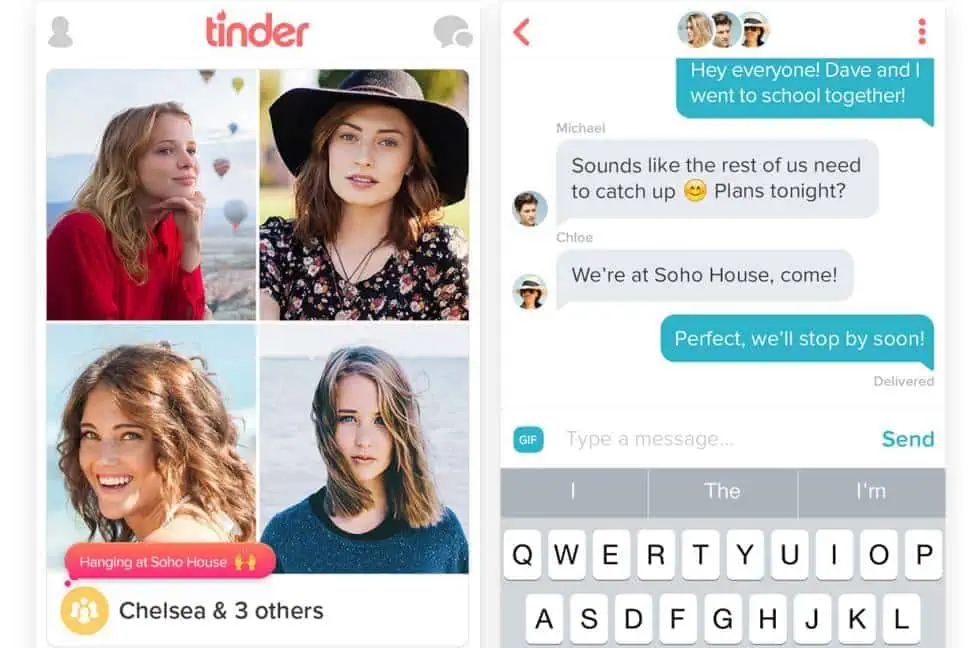
Why such low conversion? Because matching on Tinder is low-commitment. Someone swipes right on dozens of profiles in minutes, then forgets about most of them. When your message arrives, they might not remember swiping right on you, or they've already started conversations with other matches. The ease of matching creates its own inefficiency.
You'll spend time crafting opening messages that go unanswered. Even when you get responses, the early conversation often stalls out after a few exchanges because neither person knows what the other actually wants. You're both dancing around the topic, testing the waters, trying not to say the wrong thing. According to Forbes, this ambiguity extends the getting-to-know-you phase unnecessarily and leads to conversation fatigue.
AFF's Clearer Path from Profile to Dialogue
On Adult Friend Finder, if someone messages you or responds to your message, they've usually read your profile first. This dramatically improves conversation quality from the first exchange. You're not starting from zero with small talk about the weather or asking what they're looking for because that information is already visible.
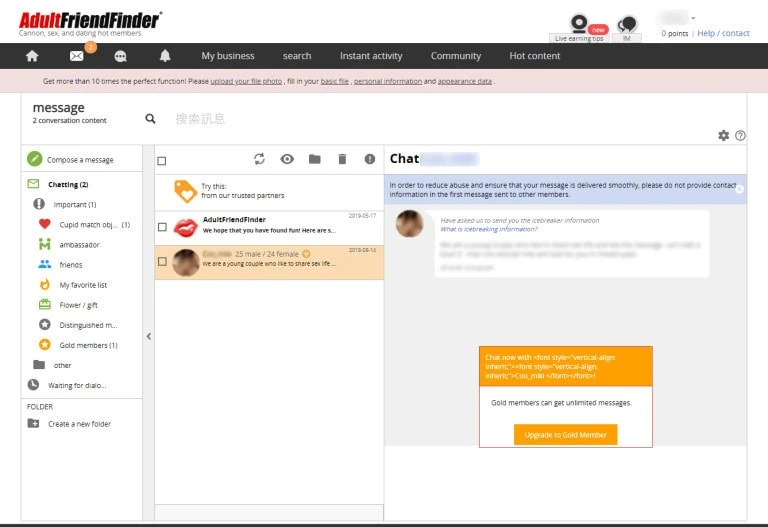
The response rate isn't necessarily higher in raw numbers, but the conversations that do start tend to be more direct and purposeful. People state their interests clearly, ask specific questions, and move toward meeting up faster because everyone's intentions are transparent. You might have fewer total conversations, but a higher percentage lead somewhere concrete.
The platform also shows you who's viewed your profile, which gives you warm leads. If someone spent time reading your full profile but didn't message, you can reach out knowing they're at least somewhat interested. This beats the cold approach of messaging Tinder matches who might not remember swiping right.
Which Platform Gets You Talking Faster
Tinder gives you more matches but fewer meaningful conversations. AFF gives you fewer initial contacts but higher-quality dialogue that goes somewhere. If you value your time, quality over quantity wins every time.
The Reality of Meeting in Person
All the messaging in the world means nothing if you never actually meet up. This is the ultimate efficiency test: how long from signup to sitting across from someone at a coffee shop or bar?

Tinder's Extended Timeline to Real Dates
The average Tinder user takes weeks or even months to go from match to first date. There's the initial matching phase, then days of messaging to build rapport, then exchanging social media to verify the person is real, then more chatting, then maybe moving to text messages, and finally suggesting meeting up.
This extended timeline happens because neither person wants to seem too eager or pushy. The platform's swipe culture creates an abundance mindset where everyone thinks there's always someone better coming in the next batch of profiles. This makes people less committed to actually meeting anyone they're currently talking to.
When dates do happen, they're often drinks or coffee, something low-commitment, because you still don't really know if you're compatible. You've seen curated photos and exchanged witty texts, but that might not translate to in-person chemistry. Many users report needing three to five first dates before finding someone worth a second date.
AFF's Faster Track to Face-to-Face Meetings
Adult Friend Finder users tend to meet faster because everyone's upfront about intentions. When you both know you're interested in casual connections or specific arrangements, there's less need for the extended getting-to-know-you dance. Conversations move from introduction to logistics relatively quickly.
The typical timeline is days rather than weeks. You exchange a few messages to confirm you're compatible, maybe a phone call or video chat for safety verification, and then you're making plans. The platform's culture accepts directness, so suggesting a meeting after a brief chat doesn't seem pushy or desperate.
This doesn't mean people skip safety checks. Most users still verify through video chat or ask for social media before meeting. But once those basics are covered, the actual meeting happens much faster because both parties are clear about why they're there.
The Meeting Efficiency Verdict
If you measure app efficiency by time from signup to sitting across from someone in person, AFF wins by a significant margin for people seeking casual connections. Tinder works better for those who want the slow-burn approach of dating, but that's a preference choice, not an efficiency advantage.
Quick Comparison: AFF vs Tinder Time Efficiency
Here's how AFF vs Tinder stacks up when you're focused purely on respecting your schedule and delivering results:
| Site or App | Best For | Key Features | Starting Price | Free Version | Notable Downside |
|---|---|---|---|---|---|
| Adult Friend Finder | People who value directness and want to meet quickly | Detailed profiles, specific search filters, active forums, and clear intentions | $14.95/month (Gold) | Browse profiles, limited messaging | Older interface design feels less polished |
| Tinder | Casual browsing with low initial commitment | Quick swipe interface, location-based matching, and integrated Instagram | $9.99/month (Plus) | Swipe and match with limited likes | Requires daily engagement to stay visible |
How Different Schedules Change the Winner
Your work life and availability dramatically affect which platform respects your time better. Not everyone has the same definition of efficiency.
The Road Warrior Schedule
If you travel constantly for work, AFF's browse-when-convenient model works better than Tinder's daily engagement requirement. You can update your location when you land in a new city, search for people nearby who match your interests, and reach out without having built up weeks of swipe history in that location.

Tinder shows you local users based on activity, which means starting fresh in every new city. You're competing with established local users who have built up their profile momentum over time. Business travelers report better results on AFF because the platform doesn't penalize location hopping.
The Predictable 9-to-5 Professional
For someone with regular hours and consistent free time, Tinder's evening swipe sessions can become a routine habit. You know you've got 30 minutes after dinner to browse, and that consistency keeps your profile visible. If you don't mind the time investment and enjoy the process of swiping, Tinder fits this schedule fine.
But if those evening hours are precious and you'd rather spend them at the gym, with friends, or pursuing hobbies, AFF's less demanding schedule works better. You can batch your browsing and messaging into one or two sessions per week and still get results.
The Unpredictable Freelance Life
Freelancers, shift workers, and anyone with irregular schedules struggle with Tinder's consistency demands. Some weeks you're slammed and barely open the app; other weeks you have plenty of free time. AFF accommodates this variability better because your profile keeps working even when you're offline for days.
The ability to leave detailed information means people can decide if they're interested without you being actively available to answer questions. This asynchronous aspect respects schedules that don't fit the typical app-checking patterns.
What the Time Investment Actually Gets You
Beyond raw efficiency, what's the quality of results you get for your time? Both platforms deliver matches, but the nature of those matches differs substantially.
Tinder's Volume Game Results
You'll get more matches, more conversations, and more variety on Tinder. The numbers work in your favor if you're willing to put in consistent effort. But much of that volume is noise: people who matched by accident, profiles that aren't active anymore, matches who never respond, or conversations that fizzle out after a few messages.
The platform succeeds at giving you options and the feeling of abundance. If you enjoy the browsing and chatting process itself, Tinder's higher volume can be entertaining rather than burdensome. Some users genuinely like the social aspect and don't mind that most matches lead nowhere.
For people seeking relationships, Tinder can deliver, but it requires patience and filtering through many incompatible matches. The time investment pays off in unexpected connections and serendipitous matches that might not have happened on more filtered platforms.
AFF's Focused Results
Adult Friend Finder delivers fewer total interactions but higher relevance per interaction. When someone contacts you, they've usually found you through specific interest searches or location filters, which means you already have baseline compatibility. The conversations are more direct, expectations are clearer, and the path to meeting is shorter.
This focused approach means your time on the app is more productive per hour invested. You're not scrolling through hundreds of profiles that obviously won't work; you're looking at a curated set of people who match your stated criteria. The search and filter tools let you be as specific or broad as you want, controlling the balance between quantity and relevance.
For casual connections, physical chemistry, and situation-specific arrangements, AFF's focused approach saves enormous amounts of time compared to Tinder's guessing game.
The Hidden Time Costs Nobody Mentions
Beyond the obvious time spent swiping and messaging, both platforms have hidden time drains that affect their true efficiency.
The Mental Energy Tax
Tinder's constant decision-making creates decision fatigue. Making hundreds of split-second judgments about people based on limited information is cognitively draining. By the time you've swiped for 20 minutes, you're making worse decisions because your brain is exhausted. Research from Stanford University shows that the abundance of choice on dating apps often leads to less satisfaction with chosen partners.

AFF's browse model is less mentally taxing because you're making fewer, more considered decisions based on more information. You might spend the same 20 minutes looking at ten detailed profiles instead of 100 photo sets, but you retain better recall of what you've seen and who interested you.
The Conversation Management Overhead
Tinder users often report juggling conversations with five to ten matches simultaneously, trying to remember who's who and what they talked about. This context-switching takes mental energy and time. You're essentially running a small relationship CRM in your head.
On AFF, fewer but more substantive conversations mean less juggling. The platform also keeps better conversation history accessible, making it easier to pick up where you left off without scrolling through days of messages to remember the context.
The Hope and Disappointment Cycle
Tinder's easy matching creates a cycle of hope and disappointment that has its own time cost. You get excited about a match, invest energy in crafting a good opening message, wait hopefully for a response, and feel deflated when it doesn't come. This emotional rollercoaster happens dozens of times per week, and while it's not measured in minutes, it definitely affects your motivation and energy.
AFF's more realistic approach sets different expectations. You're not getting the dopamine hit from constant matching, but you're also not experiencing the constant disappointment of matches that go nowhere. The steadier emotional baseline means you're more likely to stay engaged consistently rather than burning out.
Making the Time-Efficiency Choice
Which app respects your time more depends entirely on what you're trying to accomplish and how much effort you're willing to invest. Let's break down the decision framework.
When Tinder's Time Investment Makes Sense
Choose Tinder if you're open to various outcomes, enjoy the browsing process itself, have consistent daily time to invest, don't mind playing the numbers game, and are looking for potential relationships rather than immediate meetups. The platform rewards patience and volume, and if you have both, it can deliver diverse results.
Tinder also makes sense if you're in a major city with a dense population where the sheer number of users compensates for the lower conversion rates. In places like New York, Los Angeles, or Chicago, Tinder's reach advantage matters more than in smaller markets.
When AFF's Efficiency Model Wins
Pick Adult Friend Finder if your free time is limited and unpredictable, you want meetings to happen faster with less messaging, you prefer knowing exactly what people are looking for upfront, you value direct communication over subtle hints, and you're specifically interested in casual connections. The platform's efficiency advantages multiply when your schedule is tight and your goals are specific.
AFF particularly excels in mid-sized cities where Tinder's population advantage matters less and targeted searching becomes more valuable. When you're not dealing with millions of users, the ability to filter precisely delivers better results than broad swiping.
The Hybrid Approach Reality
Many people use both simultaneously, which has its own time implications. Running two apps doubles your time investment but doesn't necessarily double your results. The context-switching between platforms and managing conversations across both creates overhead that reduces overall efficiency.
If you're going to use both, be strategic: use Tinder for broader exploration and potential relationship prospects, use AFF for more immediate casual connections. Keep the purposes distinct in your mind to avoid the confusion of managing the same conversation style across platforms with different norms.
If you're ready to try the more direct approach that respects your schedule, AFF's detailed profiles and clear intentions might save you weeks of guessing games.
Pros and Cons for each platform:
Adult Friend Finder
Pros:
- Detailed profiles save time by revealing compatibility upfront
- Less daily maintenance is required to stay visible
- Direct communication culture speeds up meeting timelines
- Strong search and filter tools for precise targeting
- Works well with irregular schedules and travel
Cons:
- Smaller user base in rural areas
- The older interface feels less modern than competitors
- Premium membership needed for full functionality
- Less appropriate if seeking traditional relationships
- It can feel overwhelming with all the features and options
Tinder
Pros:
- A massive user base provides more total options
- Quick and simple to start using immediately
- Well-designed interface that's intuitive
- Works everywhere, including small towns
- Good for various relationship types, from casual to serious
Cons:
- Requires consistent daily engagement to maintain visibility
- Low match-to-conversation conversion rates
- Unclear intentions create extended messaging phases
- Algorithm favors active users, punishing breaks
- The free version has significant limitations on likes
Frequently Asked Questions
How much time should I realistically spend on dating apps per week?
Most successful users spend between three to five hours per week across profile maintenance, browsing, and conversations. This can be compressed into a few focused sessions or spread throughout the week. If you're spending more than seven hours weekly on dating apps without seeing results, the problem is likely your approach or profile quality rather than insufficient time investment. Consider focusing on fewer, higher-quality interactions rather than trying to maximize volume.
Can I get good results on either app by checking in just once or twice per week?
AFF handles sporadic check-ins better because your profile remains searchable, and people can message you whether you're active or not. Tinder's algorithm reduces your visibility if you're not logging in regularly, so twice-weekly usage will significantly limit your reach and matches. If you can only commit to minimal time, choose a platform that doesn't penalize infrequent activity or be prepared for slower results on Tinder.
Why do my matches never respond on Tinder?
Low response rates stem from the low-effort matching process. Many people swipe right on dozens of profiles quickly without carefully considering each one, then become more selective when deciding who to actually message. Your opening message might arrive when they're talking to other matches they find more interesting, or they've simply forgotten why they swiped right on you. Improving your profile quality and first message relevance can help, but some non-response is unavoidable on swipe-based platforms.
Is paying for a premium worth it on either platform?
Premium features save time on both platforms, but the value depends on your situation. On Tinder, premium removes the like limit and adds boosts that can compress weeks of organic growth into days. On AFF, premium unlocks full messaging and advanced search, which are nearly essential for effective use. If your time is valuable and you're serious about getting results, premium usually pays for itself by reducing the weeks or months spent grinding through free limitations.
How long does it typically take to meet someone in person from these apps?
Timelines vary enormously based on your goals and approach. On AFF, users seeking casual connections often meet within a few days to two weeks of matching. On Tinder, the average timeline from match to first date runs two to six weeks, with longer periods common for people seeking relationships rather than hookups. Both platforms can produce same-day meetups or months-long messaging relationships, depending entirely on what you and your match want. The clearer you are about intentions upfront, the faster the timeline, regardless of platform.
Conclusion
Your time is the most valuable thing you're investing in any dating app, far more valuable than the subscription cost. AFF vs Tinder comes down to a fundamental trade-off between Tinder's volume approach that demands consistent daily engagement, and AFF's efficiency model that delivers fewer but more relevant interactions without requiring constant attention.
Tinder respects your time if you have time to give and enjoy the browsing process itself. AFF respects your time if you want results without turning dating into a second job. For busy professionals, people with unpredictable schedules, and anyone seeking direct communication over subtle hints, AFF's approach saves hours every week while actually delivering faster paths to meeting in person.
The best choice isn't the same for everyone, but now you know exactly what each platform demands from your schedule and what you'll get in return. Make the choice based on your actual availability, not wishful thinking about how much time you'll magically find for swiping.
Sources:
https://www.pewresearch.org/short-reads/2023/02/02/key-findings-about-online-dating-in-the-u-s/
https://www.forbes.com/sites/traversmark/2025/03/28/why-couples-spend-so-long-in-the-talking-stage---by-a-psychologist/
https://psycnet.apa.org/record/2004-21028-009
When you purchase through links on our site, we may earn an affiliate commission. Here’s how it works.